
SuperCooler™
We prioritise surface area that actively transfers heat to the air over heat-sink mass alone. Our aluminium body and fin geometry aim to provide a large effective surface while supporting heat spreading and airflow.

MAX / TECHNOLOGIES
Core technology approaches developed for performance, durability and controlled heat management.
THERMAL MANAGEMENT
Our goal is not a heavier heat sink, but the largest practical surface that can effectively transfer heat to the air. Aluminium fins increase this area, yet adding more fins alone is not enough. If spacing is too tight, natural airflow can be restricted and the benefit of the extra surface can diminish.
Surface area must therefore be considered alongside the thermal path from LED to body, base and fin geometry, mounting orientation and ambient conditions. Weight alone does not indicate cooling performance. Our design objective is to preserve adequate heat conduction and mechanical strength without adding unnecessary mass.
We prioritise surface area that actively transfers heat to the air over heat-sink mass alone. Our aluminium body and fin geometry aim to provide a large effective surface while supporting heat spreading and airflow.

In variants equipped with AC Direct™, LED control is integrated into the luminaire, using a direct AC architecture instead of a separate external driver. Confirm the supply type, voltage range and control options in the selected model’s datasheet.

LED selection is considered alongside operating current, temperature and optics. A component’s luminous flux is not the luminaire’s total output; select products using the relevant variant’s luminous flux, colour temperature and colour rendering values.
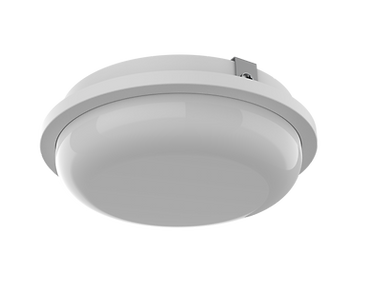
Emergency lighting kits provide battery-backed operation when mains power fails. Assess duration, emergency light output and luminaire compatibility for each model; normal operating power should not be assumed to equal emergency power.

Electrical protection is part of the power supply architecture. Check the selected model’s technical documentation for protection functions and limits. Overvoltage protection does not mean unlimited protection against every mains transient or lightning event.